
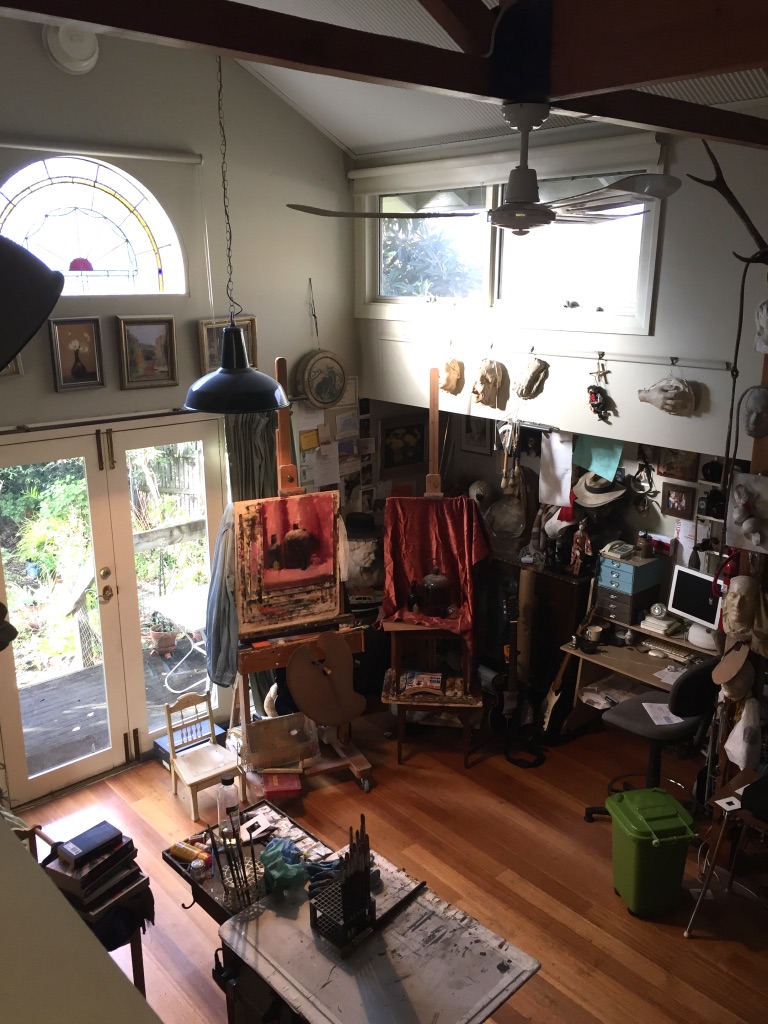
Studio atmosphere. Love at first sniff.
My early art work at the Royal Melbourne Institute of Technology was done in a Graphic Arts module run by a lecturer named Ron Center using what we called poster colour. It was mainly on paper and we were introduced to high quality water colour paper and the like. At this stage I had not touched oils at all and definitely not canvas. During that year I was also introduced to Cubism and I developed a love for the work of Georges Braque and Amedeo Modigliani.
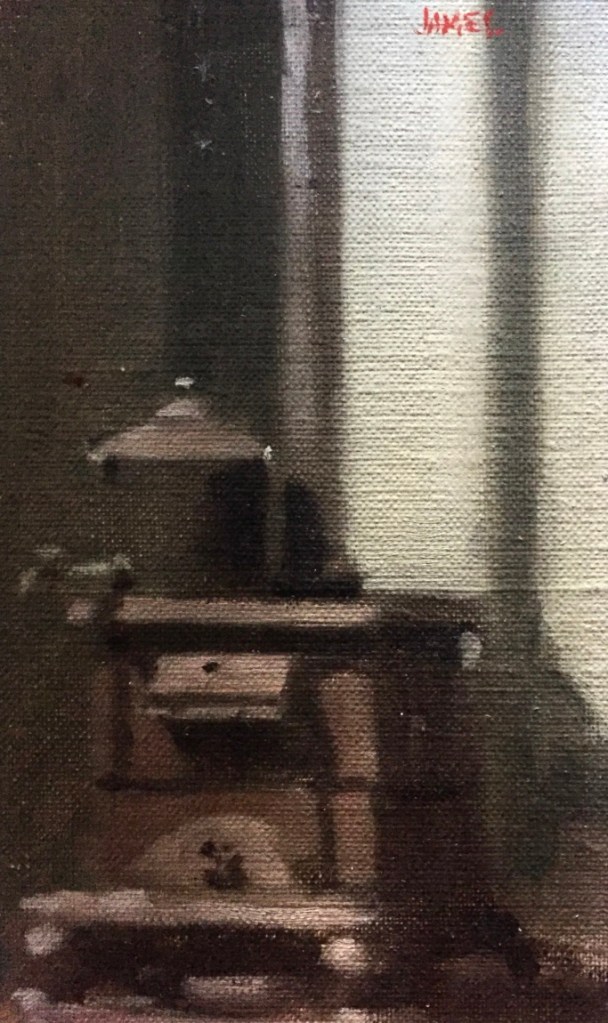
I have mentioned elsewhere a visit to the National Gallery School, now the VCA which was located opposite RMIT in combination with the public library and the then Victorian National Gallery. It was here in 1962 that I was to first experience the heady perfume of linseed oil, gum turpentine, linen canvas, gesso and dusty objects and drapery. It was love at first sniff, so to speak. I wanted more of that please. Whilst I began painting oils in the cubist manner, I really didn’t hit my straps until about ten years later when I joined a class at the Victorian Artists’ Society whose studio absolutely reeked of the stuff.
This studio is by Melbourne standards very old and quite historic. It had been built in 1874 and been used by members of the Heidelberg School as well as other notable painters before I commenced learning my craft under the ‘beady’ eye of Ms Shirley Bourne. A couple of traditions as well as the equipment of the up to twenty students in the room helped the heady atmosphere of the studio. These included a length of canvas which was hung above the stainless steel sink. This was where we placed the scrapings of paint from our palettes and wiped our brushes at the end of each session. This canvas was approximately 2m long by 1.5m high and during its life became a kaleidoscope of colour, almost a work of art. It was accompanied on the floor, by a large milk churn which was filled with turpentine augmented with paint and linseed oil as we swished our brushes in this mixture to remove the bulk of paint from them. I soon refrained from this as our teacher was a stickler for cleaning our brushes in soap and water, a practice I continued with for some ten years. until advised against it and converted to kerosene. There were many strident objections to this ‘filthy’ habit, mainly from the water colour painters who also used the studio.
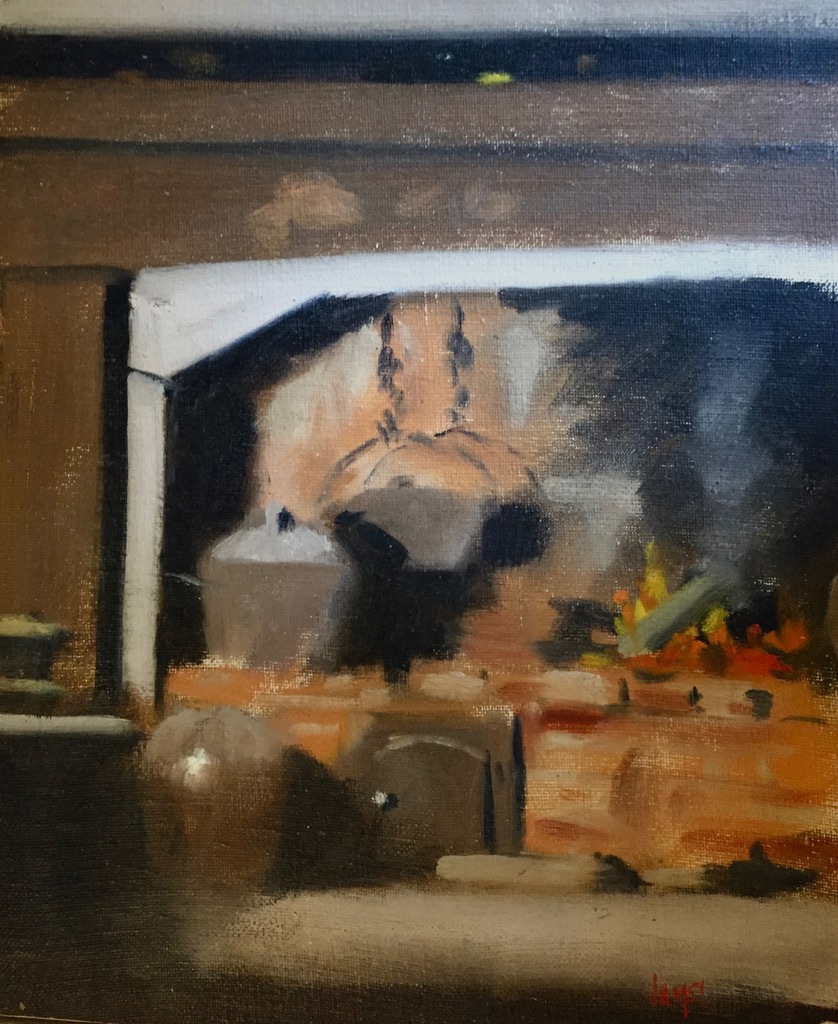
Of course in the last few years the objectors have prevailed in league with occupational health and safety and such practices have been banned in public studios. And yet many visitors to my studio still remark on entering “Oh, what a lovely perfume.” I have no milk churn by the way. My brush cleaning equipment has been banished to the back porch, but the aroma of paint, linseed oil and a dash of gum turpentine still lingers there and hopefully will for some years to come.
Don James January 2024
 Don James Art