NOVEMBER MUSINGS

When I think back to the early 1970’s when I first considered painting as a profession I spoke to my beloved Marie, the wisest person I know, and she suggested that I try to find a teacher. She had already bought me a paint box and so I sought out someone who could ‘teach me the basics.’
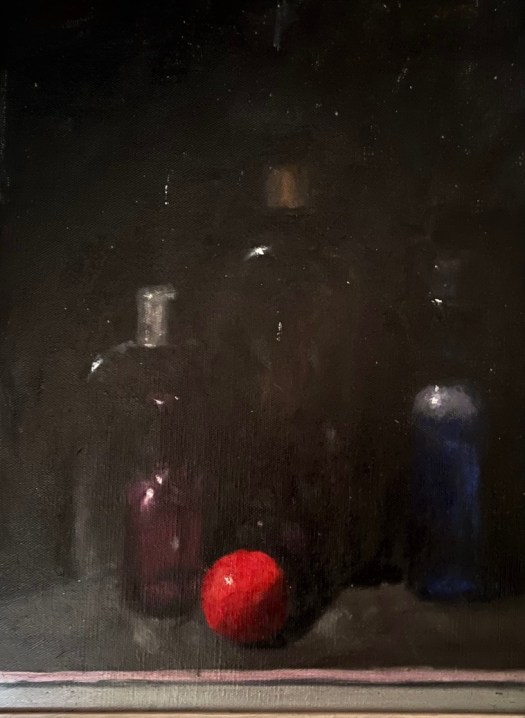
The Red Ball

I had been dabbling for some years and had been fortunate to have had some instruction in Graphic Arts and drawing at RMIT. I had been drawn to oils through their buttery quality and of course the heady perfume of gum turps and linseed oil.

So, I set out to visit a recommended school at the Victorian Artists’ Society in East Melbourne. As I was still working at a ‘normal’ job at the time, the only oil class available to me was on a Friday night with a Ms. Shirley Bourne, about whom I knew nothing, although the salesman at Camden art supplies assured me that she was a great teacher

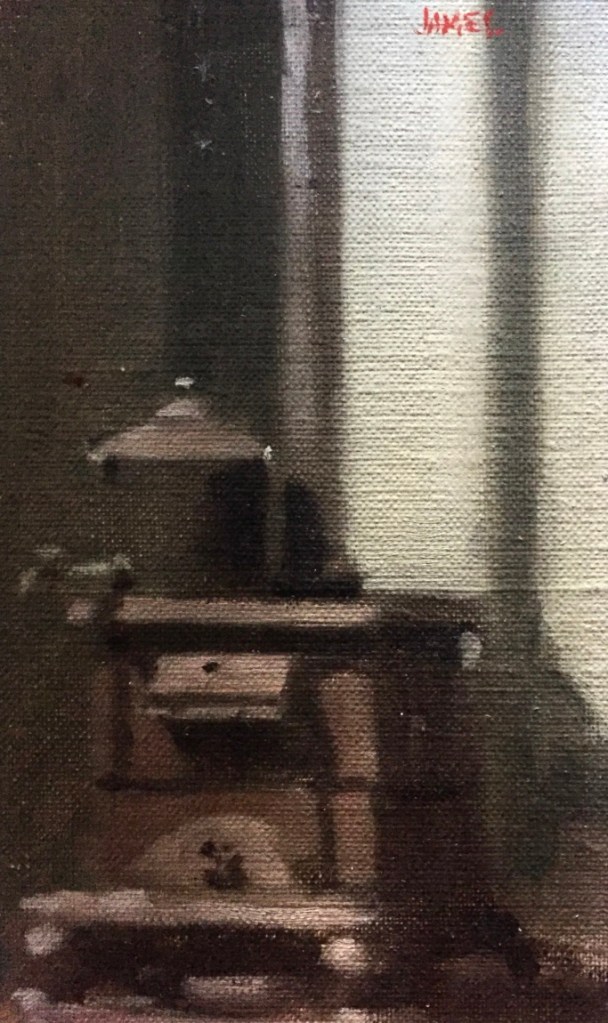
Grandma’s Vase

The class consisted of around 20 students crowded into its historic studio and was presided over by this rather stern lady with unruly hair, with which she had a constant battle. She sat at the back of the room doing puzzles when not stalking us. We were forbidden to talk and had to mix our tonal puddles after separating the lights from the darks and woe betide any ‘little one’ who put brush to canvas before those puddles were complete and correct. As well there were no cups of tea, we were there to work!

The subjects varied from bottles on check table cloths to plaster casts and daisies, of which Shirley seemed to have an endless supply and towards the end of term, a portrait or a figure which was great because we got to down tools when the model was not sitting. This was another rule, ‘no painting when the model is not sitting!’. Those who did were punished by having their paintings taken away and they had to continue mixing tones for the rest of the night. We also had to ‘hurtle’ back from our canvasses to our observation points and not look at the subject unless we were at that point, or a similar punishment ensued.

Doesn’t sound like much fun and it wasn’t initially, but I persevered and found that these few simple rules enabled me to get a half decent likeness, whether a sitter or a bunch of daisies and that Shirley had a wicked sense of humour.
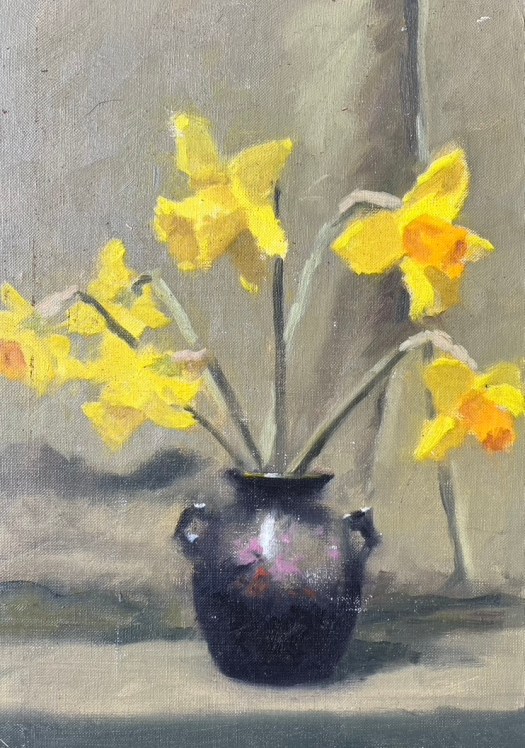
Daffs

Back then there were four ten-week terms per year and at the end of each year we would have what Shirley called and orgy. This meant after cleaning up, we would have nibbles and wine and a darned good laugh. I believe this tradition harked back to Shirley’s days at the National Gallery School where she learned from William Dargie and was ultimately his studio assistant.

I spent nine happy years in that studio under Shirley’s ‘beady eye’ and don’t regret a minute of it. She taught those willing to undergo her disciplinary regime, how to see as a painter sees.

If there is a secret to realist painting it is that to successfully paint from life, whether still life, landscape, or portraiture one must employ their objective eye and to battle the very human habit of subjectivity.

Some may be surprised to learn that the method has less to do with the pushing of paint around a canvas than with the way that the painter sees the natural world.

The key to it all is that if a student can be taught to work by this maxim and develop the consequent skills, they stand a good chance of becoming a competent painter.
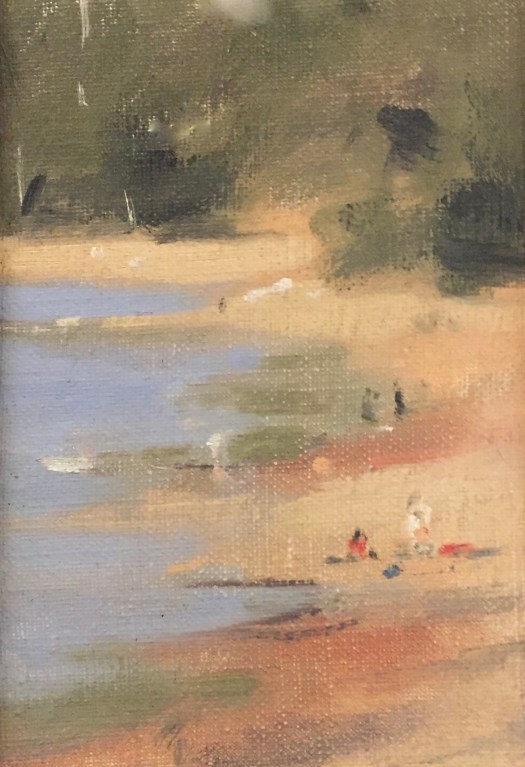
Near Cowes

To quote  J.W.M. Turner, “My business is to paint what I see, not what I know is there.”

This is also articulated by Max Meldrum and is a good basis on which to build the skill necessary to produce good or maybe even great work, but it needs to be taught properly in the realization that the student is learning a craft. For this to occur the instructor needs to have been trained in that craft and the student needs to be dedicated to the learning of it.

Don James

November 2024
WHEN I GROW UP

Face book has its uses. I listen to music that I would never hear without it, watch my favourite comedians when I need cheering up, catch up on the latest news etc, but when I look at paintings ands drawings I often find it depressing.

My friend John has a saying which he articulates often at the end of a painting session, “when I grow up.” John is a wordsmith as well as a painter. He sometimes sings in the studio, Gilbert and Sullivan or Gluck’s Orfeo and has written some of the best notes for exhibitions that I have seen, but when he has come to the end of a painting he will invariably say ‘when i grow up’ meaning of course we can always do better.

My Friend John c1990

Having been a painter for 50 years I now find that I am less pleased with my work than I have ever been. Maybe I am developing taste and becoming more self critical as with age, I lose sharpness in some of my faculties, but I think that much of it has to do with Facebook. To be able to bring to my laptop screen a Rubens head or a Rembrandt drawing is a marvellous thing but having access to those I would call the masters and to see them along side much of what passes for art today can pull one up with a shock. Of course the likes of Velasquez or Caravaggio were trained in the studio system as apprentices for years before establishing their own ateliers but even so………

When I look at the work of my teachers and their generation it obviously differs from the paintings of the late 16th century but it still outshines most of the stuff that is shown online in this, the 21st century. There are good painters out there and their work really stands out when displayed but I don’t think that the quality of art is on the improve generally. Much is being reproduced from two dimensional data such as photographs, screens or even worse, epidiascopes and it shows. What is also shown is a lack of understanding of values or the relativity which is necessary fpr a painting to really sing, as Alan Martin used to say. “Make it sing’ he would tell us when our work was humming at best. We tried Alan but always in the back of our minds was that thought, when I grow up.

Robe Reflection

Thee is a recent addition to the musings about oil painting online called, Oil Painting-Technical Discussion which I sometimes peruse and make the occasional comment. I have to say that most of the queries I find depressing and some, alarming. They take you into the realm of the hobby painter, asking questions regarding highly technical and occasionally expensive areas which I have never heard of. What ever became of things like a limited palette, linseed oil, oil primed linen and after suitable period of drying, up to 12 months a wax varnish or some damar. All of these materials are easy to use and relatively inexpensive.

Some queries run along the lines of should I add a few more trees or change the colour of the sky. It is here that I part ways with today’s apparent aesthetic.

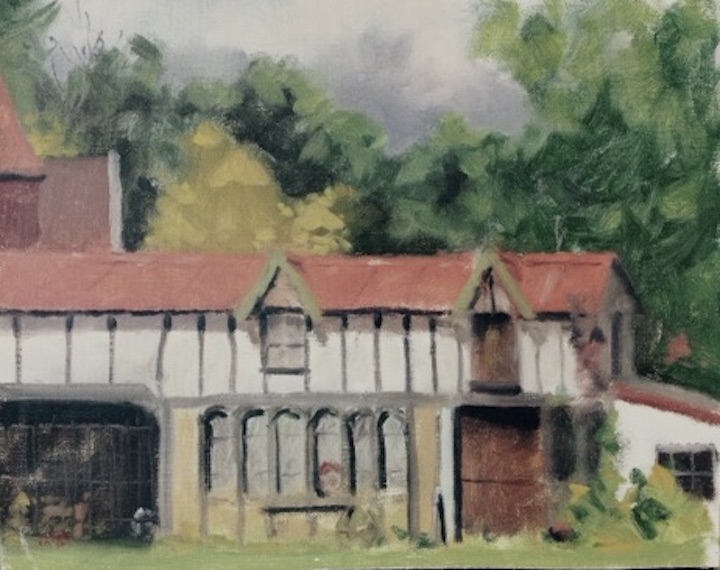
Montsalvat Workshops

Maybe my years of training were lacking. Maybe my aesthetic is out of date, I haven’t kept up with the latest trends. I was trained to and continue to paint from life. When painting still life or flowers or even portraits, one can arrange things as one wishes but once set, the only changes in the subject are naturally occurring, a flower falls, the model tires or the light changes, if working in natural light. Apart from these few things no changes! In plein-air painting the changes can be many but never contrived. Changing light, clouds, figures can all be accommodated but only as they happen. These are what make a plein air painting more like a movie than a photograph or snapshot. They make up my ‘collage of ocular facts’ which is how I see my finished work. The great Australian painter Archibald Colquhuon has been quoted as saying that the only mark that should be put onto a finished landscape in the studio is the artist’s signature. I agree.

Don James 17th March 2024

What is that awful/beautiful smell?

Studio atmosphere. Love at first sniff.

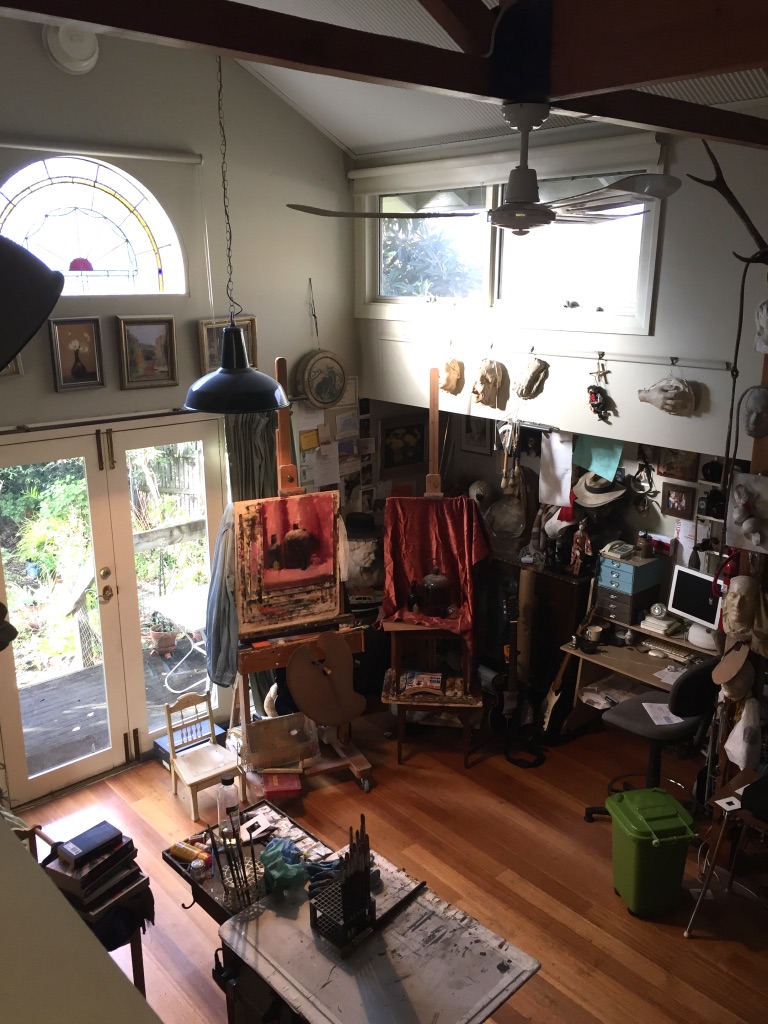
My Eaglemont studio

My early art work at the Royal Melbourne Institute of Technology was done in a Graphic Arts module run by a lecturer named Ron Center using what we called poster colour. It was mainly on paper and we were introduced to high quality water colour paper and the like. At this stage I had not touched oils at all and definitely not canvas. During that year I was also introduced to Cubism and I developed a love for the work of Georges Braque and Amedeo Modigliani.

A Corner of the Park Road Studio of Alan Martin

I have mentioned elsewhere a visit to the National Gallery School, now the VCA which was located opposite RMIT in combination with the public library and the then Victorian National Gallery. It was here in 1962 that I was to first experience the heady perfume of linseed oil, gum turpentine, linen canvas, gesso and dusty objects and drapery. It was love at first sniff, so to speak. I wanted more of that please. Whilst I began painting oils in the cubist manner, I really didn’t hit my straps until about ten years later when I joined a class at the Victorian Artists’ Society whose studio absolutely reeked of the stuff.

This studio is by Melbourne standards very old and quite historic. It had been built in 1874 and been used by members of the Heidelberg School as well as other notable painters before I commenced learning my craft under the ‘beady’ eye of Ms Shirley Bourne. A couple of traditions as well as the equipment of the up to twenty students in the room helped the heady atmosphere of the studio. These included a length of canvas which was hung above the stainless steel sink. This was where we placed the scrapings of paint from our palettes and wiped our brushes at the end of each session. This canvas was approximately 2m long by 1.5m high and during its life became a kaleidoscope of colour, almost a work of art. It was accompanied on the floor, by a large milk churn which was filled with turpentine augmented with paint and linseed oil as we swished our brushes in this mixture to remove the bulk of paint from them. I soon refrained from this as our teacher was a stickler for cleaning our brushes in soap and water, a practice I continued with for some ten years. until advised against it and converted to kerosene. There were many strident objections to this ‘filthy’ habit, mainly from the water colour painters who also used the studio.

Boat Studio Montsalvat (Destroyed by fire in 1996)

Of course in the last few years the objectors have prevailed in league with occupational health and safety and such practices have been banned in public studios. And yet many visitors to my studio still remark on entering “Oh, what a lovely perfume.” I have no milk churn by the way. My brush cleaning equipment has been banished to the back porch, but the aroma of paint, linseed oil and a dash of gum turpentine still lingers there and hopefully will for some years to come.

Don James January 2024