
Face book has its uses. I listen to music that I would never hear without it, watch my favourite comedians when I need cheering up, catch up on the latest news etc, but when I look at paintings ands drawings I often find it depressing.
My friend John has a saying which he articulates often at the end of a painting session, “when I grow up.” John is a wordsmith as well as a painter. He sometimes sings in the studio, Gilbert and Sullivan or Gluck’s Orfeo and has written some of the best notes for exhibitions that I have seen, but when he has come to the end of a painting he will invariably say ‘when i grow up’ meaning of course we can always do better.
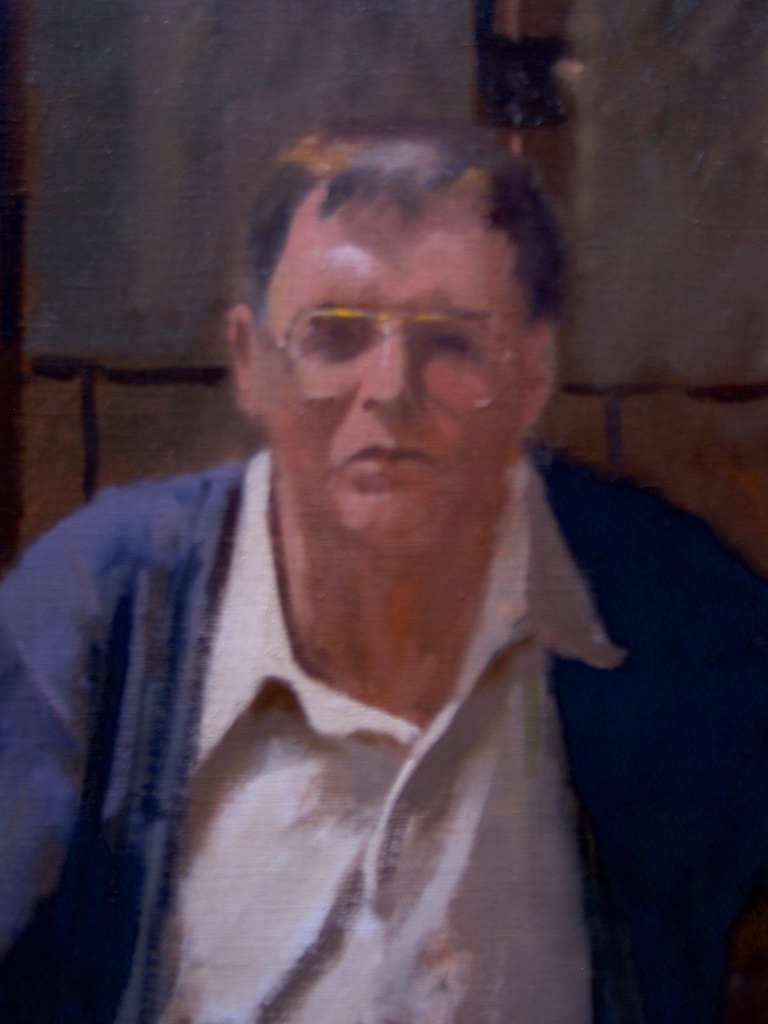
Having been a painter for 50 years I now find that I am less pleased with my work than I have ever been. Maybe I am developing taste and becoming more self critical as with age, I lose sharpness in some of my faculties, but I think that much of it has to do with Facebook. To be able to bring to my laptop screen a Rubens head or a Rembrandt drawing is a marvellous thing but having access to those I would call the masters and to see them along side much of what passes for art today can pull one up with a shock. Of course the likes of Velasquez or Caravaggio were trained in the studio system as apprentices for years before establishing their own ateliers but even so………
When I look at the work of my teachers and their generation it obviously differs from the paintings of the late 16th century but it still outshines most of the stuff that is shown online in this, the 21st century. There are good painters out there and their work really stands out when displayed but I don’t think that the quality of art is on the improve generally. Much is being reproduced from two dimensional data such as photographs, screens or even worse, epidiascopes and it shows. What is also shown is a lack of understanding of values or the relativity which is necessary fpr a painting to really sing, as Alan Martin used to say. “Make it sing’ he would tell us when our work was humming at best. We tried Alan but always in the back of our minds was that thought, when I grow up.

Thee is a recent addition to the musings about oil painting online called, Oil Painting-Technical Discussion which I sometimes peruse and make the occasional comment. I have to say that most of the queries I find depressing and some, alarming. They take you into the realm of the hobby painter, asking questions regarding highly technical and occasionally expensive areas which I have never heard of. What ever became of things like a limited palette, linseed oil, oil primed linen and after suitable period of drying, up to 12 months a wax varnish or some damar. All of these materials are easy to use and relatively inexpensive.
Some queries run along the lines of should I add a few more trees or change the colour of the sky. It is here that I part ways with today’s apparent aesthetic.
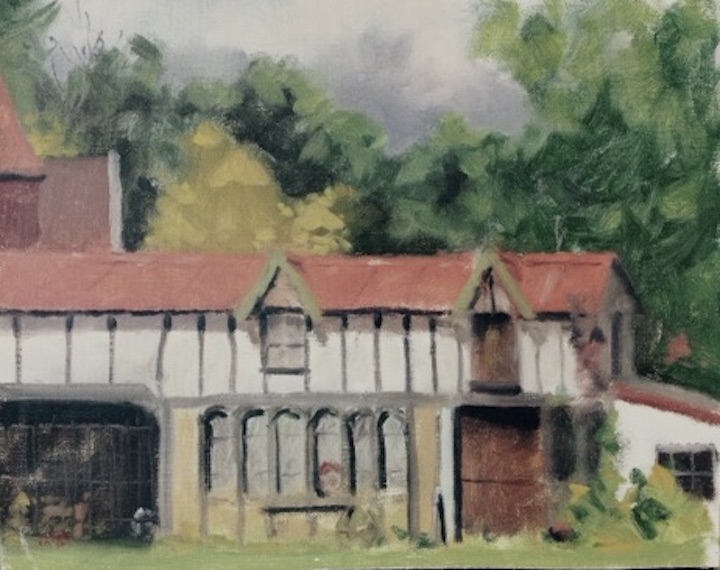
Maybe my years of training were lacking. Maybe my aesthetic is out of date, I haven’t kept up with the latest trends. I was trained to and continue to paint from life. When painting still life or flowers or even portraits, one can arrange things as one wishes but once set, the only changes in the subject are naturally occurring, a flower falls, the model tires or the light changes, if working in natural light. Apart from these few things no changes! In plein-air painting the changes can be many but never contrived. Changing light, clouds, figures can all be accommodated but only as they happen. These are what make a plein air painting more like a movie than a photograph or snapshot. They make up my ‘collage of ocular facts’ which is how I see my finished work. The great Australian painter Archibald Colquhuon has been quoted as saying that the only mark that should be put onto a finished landscape in the studio is the artist’s signature. I agree.
Don James 17th March 2024

 Don James Art